
Built by a Community,
For a Community
From two neighbourhood mosques serving Sembawang’s Muslim families to a single home for the Ummah at Admiralty Lane.
About Assyafaah
Built by a Community,
For a Community
From two neighbourhood mosques serving Sembawang’s Muslim families to a single home for the Ummah at Admiralty Lane.
Assyafaah Heritage
Masjid Assyafaah – A Journey Rooted in Sembawang
The story of Masjid Assyafaah begins long before the mosque opened its doors in 2004. It is a story shaped by the growth of Sembawang and the generations of Muslims who built their lives, families and communities here.
From the early Muslim community around the naval base to the families and residents of northern Singapore today, each generation has contributed to the heritage that Assyafaah carries forward.
1920s
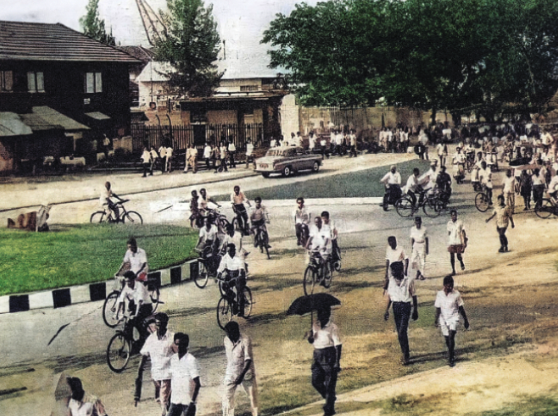
The Roots of Sembawang's Muslim Community
In the 1920s, Indian Muslim migrants working around the naval base established Masjid Jumah Sembawang along Sembawang Road.
For generations, the mosque served as an important place of worship and community gathering for Muslims in the area. It remained a familiar landmark in Sembawang until its closure and demolition in 1995 as the area underwent redevelopment.
1968

A Mosque for the Naval Community
As the Muslim population connected to the British Naval Base grew, a larger place of worship was needed.
Masjid Naval Base was established in 1968 at the junction of Canberra Road and Delhi Road. Initially serving Muslims within the naval base, it was opened to the wider public in 1972 following the British withdrawal.
1995

An End of One Chapter
The demolition of Masjid Jumah Sembawang in 1995 marked the close of one of Sembawang’s earliest mosque communities.
But Sembawang itself was changing. As redevelopment transformed the area and its population grew, the need for a new mosque – one that could serve a larger and evolving community — became increasingly clear.
Early 2000s

Building for a New Generation
The next chapter began with the development of Masjid Assyafaah under Phase III of the Mosque Building Fund (MBF).
As Masjid Naval Base was eventually closed and demolished, a new mosque took shape to meet the needs of Sembawang’s growing Muslim population. Assyafaah brought together the heritage of the area’s earlier mosque communities while creating a new centre for worship and community life.
9 April 2004
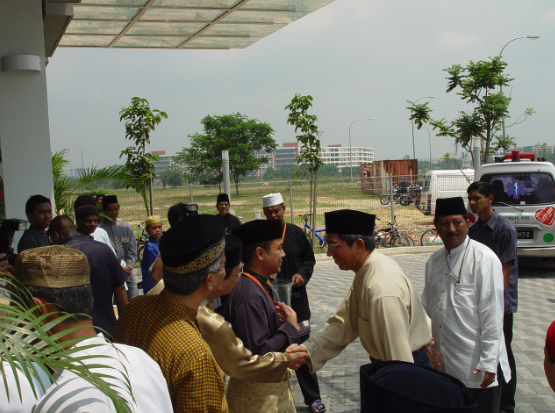
A New Beginning
On 9 April 2004, Masjid Assyafaah officially opened its doors.
Designed to accommodate approximately 4,000 worshippers, the mosque became a new landmark for Muslims in Sembawang and the surrounding areas.
The name Assyafaah comes from the Arabic Shafa’ah, meaning intercession.
Early 2000s-2010s

Growing as a Community Institution
In the years that followed, Assyafaah grew into a wider community institution.
Its programmes brought together youths, families and the wider community, with initiatives focused on leadership, volunteerism, religious understanding and social support. Among these were Youth Alive! camps, zakat distribution and the Darul Hadith initiative, which shared the teachings and sayings of the Prophet ﷺ with both youth and adults.
2020
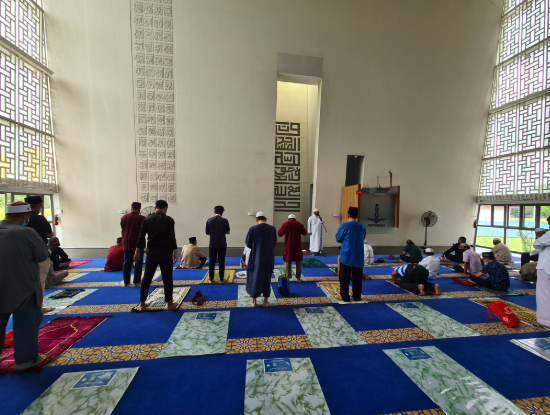
A Community Tested
The COVID-19 pandemic brought an unprecedented challenge to communities and places of worship.
Masjid Assyafaah adapted to the changing circumstances, implementing safe management measures and supporting the progressive reopening of Friday prayers from 2020 onwards.
Today
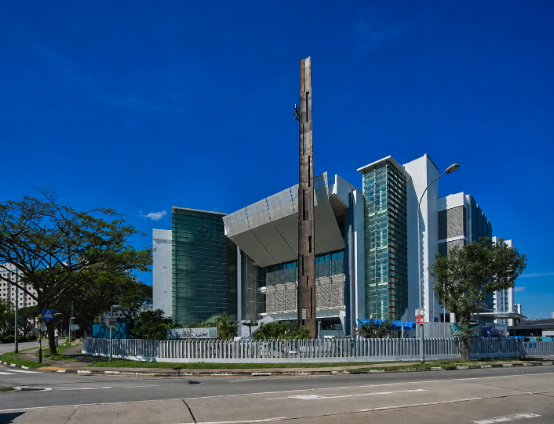
The Journey Continues
A Dynamic Mosque Serving a Progressive Community
Today, Masjid Assyafaah continues to serve Sembawang as a place of worship, learning and community.
Its heritage stretches across generations — from the Indian Muslim workers of the 1920s, to the naval community, and now to the families, youths and residents who call northern Singapore home.
As Sembawang continues to evolve, so does Assyafaah. The mosque looks ahead through Islamic learning, community development, youth engagement, social support and meaningful partnerships, while remaining grounded in the history that brought it here.
From Two Mosques to One Home
Assyafaah Mosque was completed in 2004 under the Mosque Building Fund (MBF) scheme, built to serve the social and spiritual needs of the growing Muslim community in Sembawang. But its story begins decades earlier — in two mosques that no longer stand, whose congregations it was built to bring together.
Masjid Jumah Sembawang
Established along Sembawang Road by Indian Muslim migrants who came to work at the Naval Base.
Masjid Naval Base
Built at the junction of Canberra Road and the now-defunct Delhi Road, serving the community for decades.
Assyafaah Mosque Opens
Built under the Mosque Building Fund scheme, consolidating both congregations into one home for the Ummah at Admiralty Lane.
Masjid Jumah Sembawang
Established along Sembawang Road by Indian Muslim migrants who came to work at the Naval Base.
Masjid Naval Base
Built at the junction of Canberra Road and the now-defunct Delhi Road, serving the community for decades.
Redevelopment
Both mosques give way to redevelopment, leaving their congregations in need of a shared home.
Assyafaah Mosque Opens
Built under the Mosque Building Fund scheme, consolidating both congregations into one home for the Ummah.

A Home For Every Generation
Assyafaah was built to be more than a replacement for what came before it. Serving the Sembawang and Admiralty community, it brings together prayer, learning, and belonging under one roof — from a child’s first Quran lesson to an elder’s quiet moment in the front row.
That same spirit — rooted locally, open to every background — carries forward the purpose both Masjid Jumah Sembawang and Masjid Naval Base were built for.